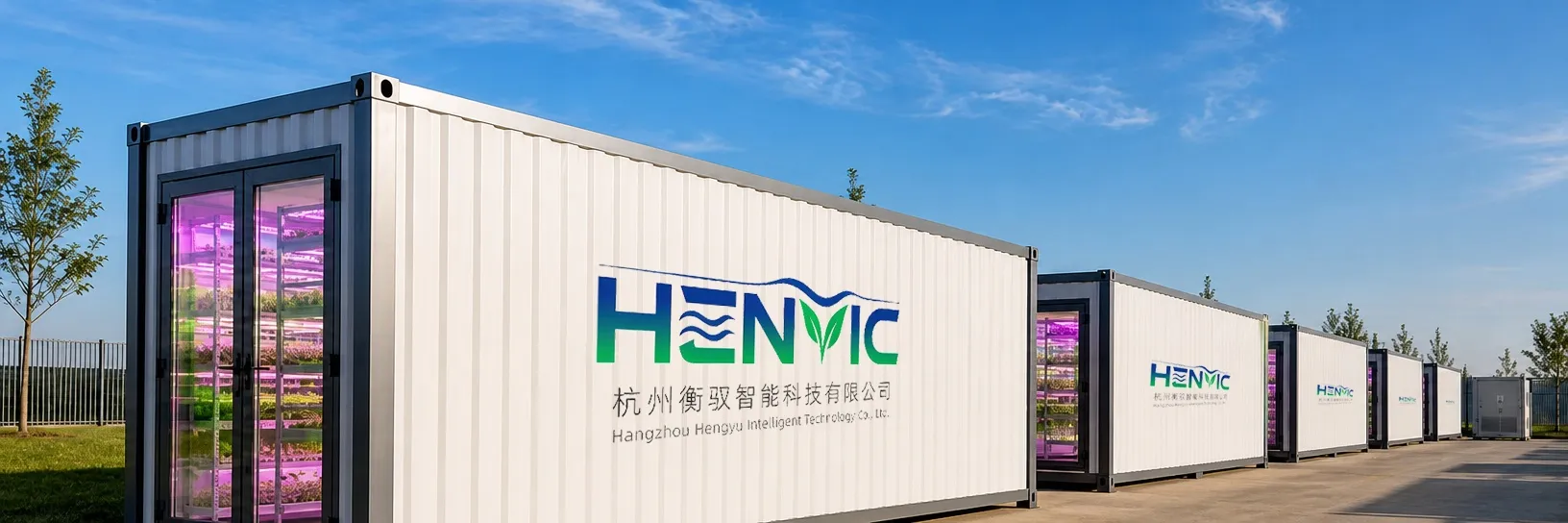
Container farms, glass greenhouses, and vertical farms are often discussed as competing versions of "controlled-environment growing," and it's tempting to treat them as points on one line, from cheap to expensive. They aren't. Each one is a different answer to a different question: how much of the environment you're trying to control, how large a footprint you need to do it, and what your revenue per square metre can afford. Choosing between them is less a matter of picking the "best" technology and more a matter of matching a system to a specific set of constraints — a crop, a climate, a land price, an electricity bill, and a market.
A glass greenhouse is a managed compromise
A glass greenhouse is the oldest of the three and, conceptually, the most modest in ambition. It is a covering that traps some heat, filters some light, and extends a growing season by shielding plants from wind, rain, frost, and extreme temperature swings. It can extend a season by a few weeks to a few months depending on climate, but it doesn't control light, humidity, temperature with precision, or root-zone conditions. It is, in effect, a semi-controlled environment — the best approximation of outdoor growing while still being inside a structure.
The capital cost reflects that modesty. A commercial glass greenhouse typically costs between
30
𝑎
𝑛
𝑑
100 per square metre of footprint to install, depending on specification and geography. Operating costs are dominated by heating in winter and cooling and dehumidification in summer. Energy consumption is seasonal and weather-dependent: a heated glass greenhouse in a cold climate can carry significant energy costs per kilogram produced, but a greenhouse in a Mediterranean climate may use almost no supplemental heat.
What matters most for the decision is that a glass greenhouse uses roughly one square metre of land to grow one square metre of plant. There is no stacking, no space efficiency beyond the footprint itself. Its productivity advantage over open field comes from season extension and weather protection, not from area efficiency.
A container farm is an enclosure that has given up on seasonality
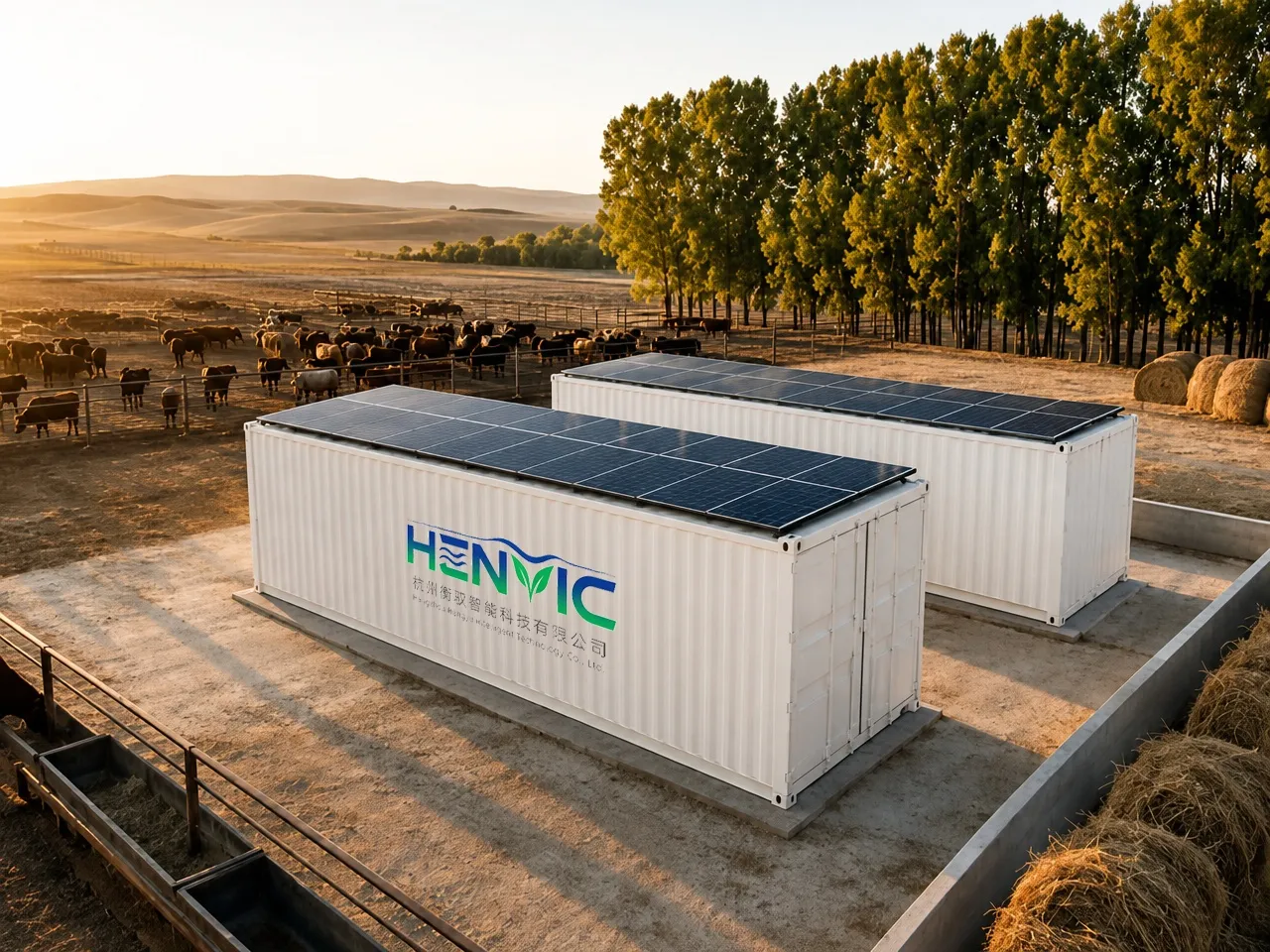
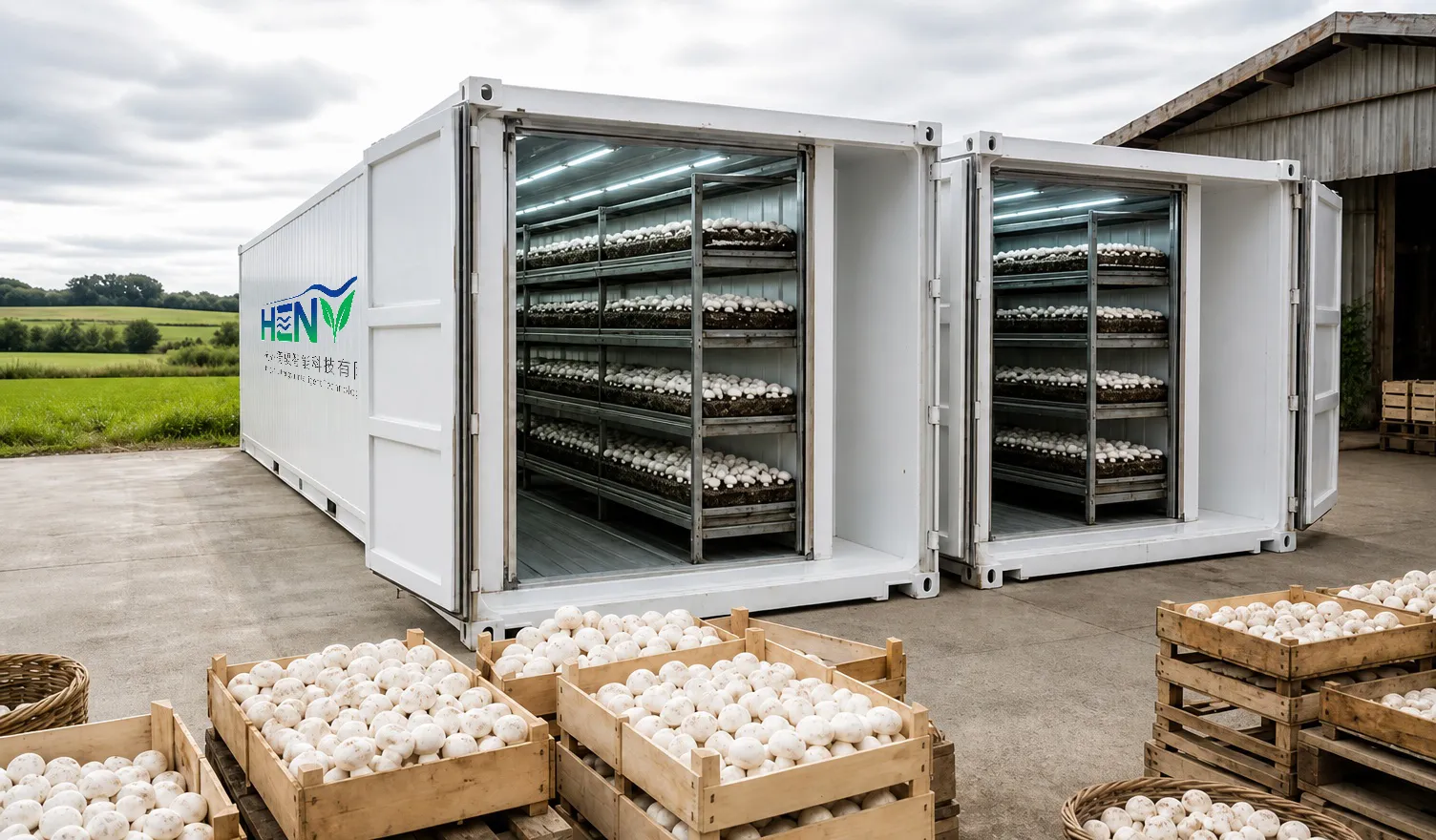
A container farm takes the greenhouse idea and reverses its philosophy. It stops trying to work with the weather and instead removes it entirely. A sealed steel box with controlled light, temperature, humidity, and irrigation removes not only seasonality but also day-to-day weather, pest pressure, and much of the daylight dependency. The result is a system that can produce year-round, regardless of climate, with a consistency that field or greenhouse crops rarely match.
The trade is simple to state and brutal to pay for. Because the environment is entirely manufactured, the energy bill is entirely unmanaged by nature. Lighting, air conditioning, dehumidification, and circulation run continuously. Published analyses of container-farm economics routinely place electricity as the dominant operating expense — often a quarter to over half of total operating cost, with lighting and dehumidification the largest components. The energy intensity per kilogram produced is typically far higher than for greenhouse or field growing, and it doesn't fall with good weather.
The capital cost sits between the two other systems. A fully outfitted 40-foot container farm typically falls between roughly
80
,
000
𝑎
𝑛
𝑑
150,000, depending on tier count, lighting, HVAC capacity, and automation. That buys a contained system with a self-contained control environment — a significant advantage where land is scarce, contaminated, or unavailable, or where the growing must happen inside an existing building.
Where a container farm becomes genuinely compelling is the space efficiency. A 40-foot box has roughly 30 square metres of floor but can support 60–100 square metres of effective growing area across multiple tiers. On an area-efficiency basis, it can outperform a glass greenhouse by a factor of two or more. This makes it suited not to competing with field agriculture on commodity volume, but to supplying high-value crops at high density in small footprints.
A vertical farm is a skyscraper built for plants
A vertical farm is the fully engineered version of what a container farm does inside a box, scaled to a building. It stacks growing tiers through several floors of a purpose-built or retrofitted structure, using the same principles — controlled light, temperature, humidity, and nutrient delivery — at a much larger scale.
The economics change in kind rather than degree. The capital cost per square metre of footprint is high, but because the building produces multiple tiers of harvest from the same footprint, the cost per square metre of growing area can be competitive. The per-unit capital intensity is large enough that vertical farms typically operate as capital-intensive commercial ventures backed by private investment or venture capital, with total build-outs often in the range of
50
𝑡
𝑜
150 million for a single large facility.
What distinguishes a vertical farm from a container farm is not the crop range — both grow the same leafy greens, herbs, and specialty crops — but the scale of capital and the corresponding need for scale efficiency to work. A vertical farm needs volume to amortise its capital across enough output. It operates most economically when producing commodity-priced products at high volume, which is why the crops it chooses tend to be those with a consistent, high-demand market — lettuce, herbs, and some small fruit crops.
The energy bill is the dominant constraint for vertical farms too. Lighting alone is the largest cost component, and because the facility's footprint is fixed while output volume is proportional to the number of tiers, the mathematics of the business depend on getting high output per unit of lighting energy. The promise of LED efficiency improvements and intelligent lighting schedules is what makes the model viable at all; without continued efficiency gains, vertical farms struggle to compete on energy cost per kilogram with greenhouse growing.
Where they diverge: the boundaries of each model
The real differences emerge when you look at the boundaries, because each system fails under different conditions.
A glass greenhouse is cheapest per square metre of growing area but uses no space efficiently. It works well in moderate climates, for crops that tolerate seasonal variation, and for producers serving a regional market where land is available and cheap. Its biggest weakness is climate dependency — the same structure that extends a growing season in one location can be nearly useless in another, and cooling costs in hot, humid climates can make a greenhouse effectively unusable in summer.
A container farm is expensive per square metre of growing area and the most energy-hungry per kilogram, but it is the most flexible. It can be placed almost anywhere — on a roof, in a warehouse, in a desert, on an Arctic base — because it is self-contained. It suits high-value, low-weight crops, urban supply, and locations where land or climate makes greenhouse or field growing impractical. Its biggest weakness is unit economics: unless the crops sell at a premium, the electricity bill overwhelms the revenue.
A vertical farm is the most capital-intensive and requires the most scale to work, but it is the most efficient at producing a given quantity of a given crop in a given footprint, and it is the only one of the three that can plausibly compete with greenhouse production on commodity-priced greens in a high-cost-of-living city. Its biggest weakness is the sheer scale of the bet: if it doesn't reach the planned output, the capital cost per unit sold stays high.
The boundary that actually decides
The decision between these three comes down to one number that most planning documents skip: the value per square metre per cycle of the crop you plan to grow, against the cost per square metre per cycle of operating the system.
A glass greenhouse producing commodity tomatoes at a regional price can work on a thin margin. A container farm trying to produce the same tomato at the same price cannot. A vertical farm producing lettuce for a premium urban grocery chain can work at scale, but the same vertical farm producing lettuce for a wholesale market likely cannot. The technology doesn't create the value; the market does.
What the three systems share is a dependence on electricity that never stops. The only genuine difference between a container farm and a vertical farm is how much of that energy you spend per unit of output, and that difference is determined not by the growing technology but by scale, engineering, and the sophistication of the control system. A greenhouse spends the least, but it also gets the least control. A vertical farm spends the most, but it also gets the most output per unit of land.
Where each one wins
In a moderate climate with available land, growing a crop that tolerates weather variation and a modest season extension, a glass greenhouse is the only model that makes financial sense. It is the cheapest, the simplest to operate, and the lowest-risk.
Where climate is harsh, land is scarce, and the crop commanding a premium price, a container farm is the strongest fit. Its flexibility and self-contained operation are what make it viable, and its high electricity cost is the price of producing the exact crop the market wants, exactly when it wants it.
Where the market is large enough, the capital is available, and the output volume can amortise the investment, a vertical farm is the only model that can produce high-volume, high-value crops efficiently enough to compete. Its scale is both its strength and its risk: the bet is big, the payoff is proportional, and the margins are thin.
The honest conclusion is that none of these three is the "right" answer in general. They are three different bets, each on a different combination of crop, market, climate, and capital. The system that survives is the one where the value per square metre justifies the cost per square metre — and where the failure of any single input doesn't take the whole operation with it.