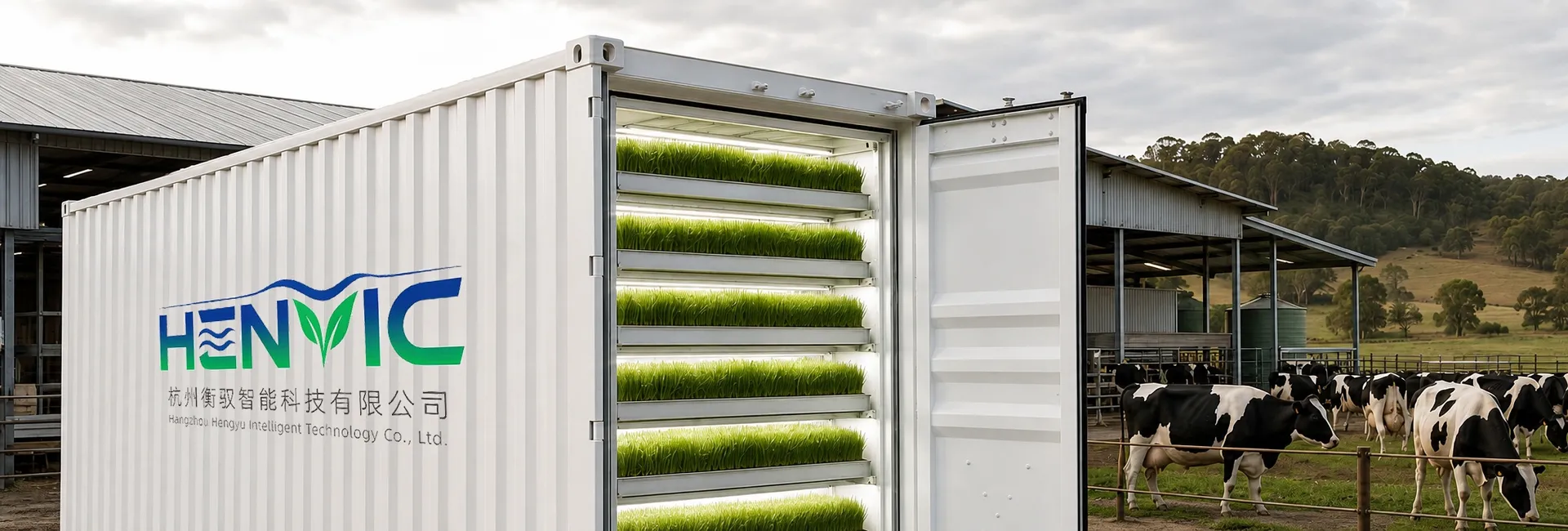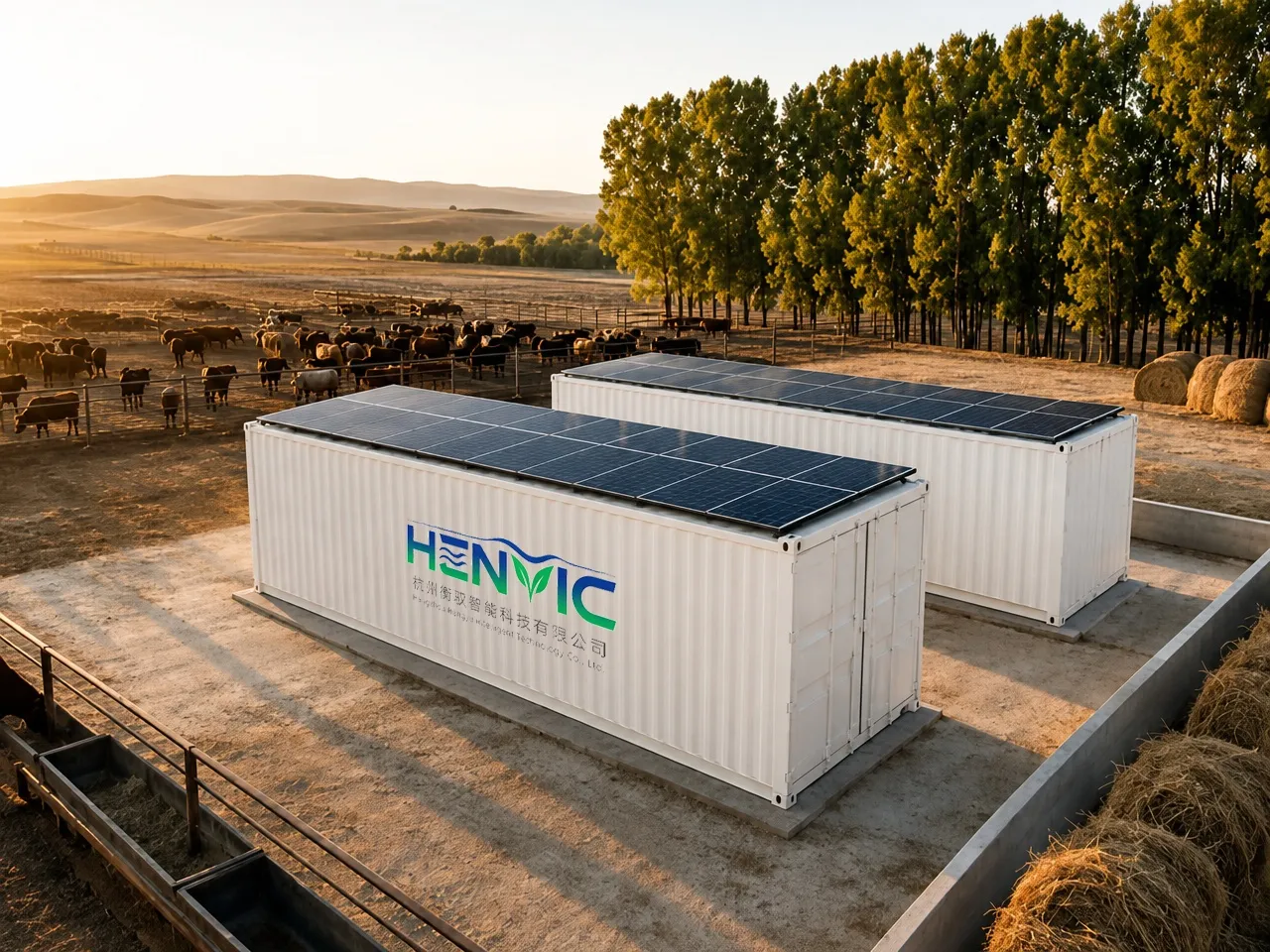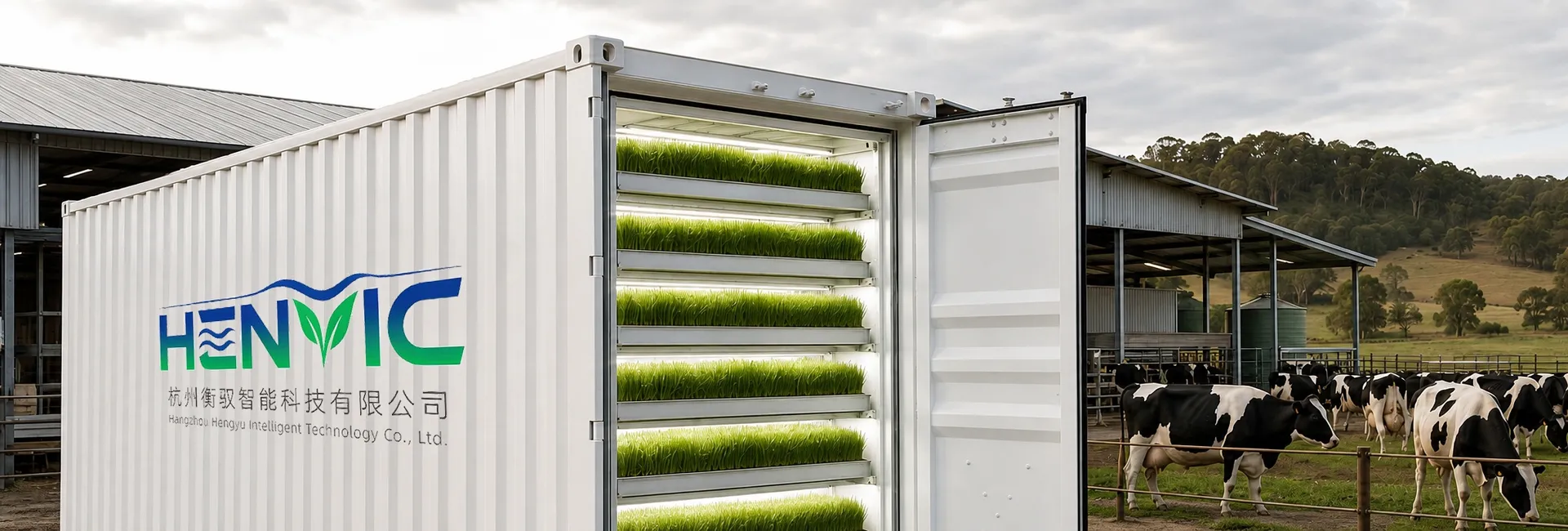
Container farming refers to the practice of converting a standard shipping container into a sealed, climate-controlled growing chamber in which seeding, cultivation, and harvest all take place inside roughly thirty square meters of steel. It is best understood as a modular form of Controlled Environment Agriculture (CEA) — a portable cousin of the vertical farm that replaces open fields, greenhouses, and purpose-built facilities with a single enclosed unit, where light, temperature, humidity, nutrients, and water are managed entirely by humans rather than by weather and soil.
The idea is not new in principle. Greenhouses have controlled climate for centuries, and indoor hydroponics has been commercial for decades. What container farming adds is standardization and mobility: the growing environment arrives as a finished, plug-in product rather than as a construction project. That shift changes who can farm, where they can farm, and how quickly a production site can be established.
How the System Works
A working farm container integrates five subsystems that must operate together.
The growing system typically relies on multi-tier hydroponics or aeroponics. Instead of a single horizontal plane of soil, crops are stacked across four to six levels, multiplying output per square meter of floor space. Roots sit in a nutrient solution or hang in a misted chamber, and growing media — when used at all — serve mainly as physical support rather than as a nutrient reservoir.
The lighting system is built around LED grow lights. Because sunlight is excluded, the spectrum becomes a design variable: red-to-blue ratios, intensity, and photoperiod are tuned to specific crops and growth stages. Modern fixtures allow dimming and scheduling that mimic sunrise and sunset, reducing plant stress and shaping morphology such as leaf size and stem length.
The climate system regulates temperature, humidity, carbon dioxide concentration, and airflow. Cooling is often the single largest load in warm climates; in cold climates, heating and insulation dominate. Air circulation matters more than it might appear, because stagnant air invites mold and uneven growth across a stacked rack.
The nutrient delivery system uses pumps, tubing, and sensors to hold electrical conductivity and pH within tight ranges. Water recirculates through the root zone, and consumption is a fraction of what field irrigation requires — the same water serves the plants repeatedly rather than draining away.
Finally, sanitization, monitoring, and connectivity modules tie everything together. Sensors stream data to a control platform, allowing remote oversight and smartphone-based management, while ultraviolet treatment or filtration limits pathogen buildup in a recirculating system.
Where the Advantages Lie
The value of container farming comes down to four kinds of independence.
Independence from climate means cold northern regions, arid deserts, island communities, and urban basements can all produce year-round. A box in Norway and a box in the Gulf can run the same crop program.
Independence from land means abandoned warehouses, rooftops, parking lots, and even former industrial sites can host a container without soil preparation or land remediation. The unit sits on a slab, connects to power and water, and starts producing.
Independence from distance is often the strongest commercial argument. Placing a growing unit behind a supermarket, inside a restaurant supply hub, or at a neighborhood entrance compresses the time from harvest to shelf to a few hours. Leafy greens are highly perishable; shortening that window reduces spoilage, preserves quality, and cuts the transport emissions embedded in every head of lettuce flown or trucked in from distant regions.
Independence from season means the same physical box can rotate through lettuce, basil, strawberries, or microgreens by adjusting light recipes and nutrient formulas. A grower can respond to demand shifts within weeks rather than waiting for a planting window.
Because the environment is sealed and soil-free, pesticide use can be substantially reduced, and in well-managed operations approaches zero. That matters for crops eaten raw, where residue concerns reach consumers directly.
What Actually Grows Well
Crop selection is where many projects succeed or fail. The format favors short-cycle, low-growing, high-value produce: leafy greens such as lettuce, kale, and spinach; herbs including basil, mint, and cilantro; microgreens and sprouts; edible flowers; and small fruiting crops like strawberries and cherry tomatoes, though the latter demand more light and space and therefore higher investment.
The format does not suit staple grains, root vegetables that need depth for tuber development, fruit trees, or tall crops. It is not a route to food security in the sense of replacing wheat and rice production. Its role is closer to that of a precision supplier: consistent, local, premium-quality fresh produce delivered on a predictable schedule.
The Real Constraints
The barriers are equally clear, and honest assessment matters more than enthusiasm.
Energy consumption comes first. Artificial lighting and climate control run continuously, and electricity typically represents the largest share of operating cost. Because margins on leafy greens are thin, the cost of power per kilogram of yield determines viability more than any other variable. Projects in regions with cheap or renewable electricity have a structural advantage; projects paying high commercial rates must either command premium prices or operate with exceptional efficiency.
Capital and operations come second. Retrofitting a container and integrating lighting, cooling, irrigation, and control systems requires significant upfront investment, and the payback period depends on yield consistency and price realization. The labor requirement is modest in hours but demanding in skill: someone must understand electrical systems, nutrient chemistry, and plant physiology, and be able to diagnose a yellowing leaf as a pH drift rather than a light problem.
Third, output per box is modest. A single container produces a meaningful volume of greens for a restaurant group or a small retail chain, but it does not feed a city. Scaling means replicating units, which multiplies both capital and management complexity.
Fourth, biological risk persists even in a sealed box. A pathogen introduced on seed or through a filter can spread rapidly through a recirculating system, and a power failure in summer can destroy an entire crop within hours.
Where the Technology Is Heading
Several directions are converging. LED efficiency continues to improve, which directly attacks the dominant cost. Climate algorithms are becoming more predictive, using sensor history and crop models to anticipate rather than merely react to conditions. Cooling loads are being reduced through better insulation, heat recovery, and evaporative strategies. Solar and battery integration is pushing some containers toward partial or full off-grid operation, particularly valuable in remote locations.
Standardization is another trend. As more units are deployed, designs converge on modular racks, plug-and-play nutrient skids, and common control platforms, which lowers engineering cost per unit and makes replication faster. Data accumulated across many containers can inform cultivation recipes that are shared or licensed, turning operational knowledge into a product in its own right.
A Defined Role
Container farming is best understood not as a replacement for conventional agriculture but as a complement to it. It occupies a specific niche: fresh, perishable, high-value crops grown close to the point of consumption, in places and seasons where conventional supply is expensive, unreliable, or impossible. Its economics depend on energy prices, crop value, and operational discipline rather than on land and weather.
The lasting contribution may be less about the steel box itself and more about what it demonstrates: that food production can be decoupled from geography, that quality and predictability can be engineered, and that a farm can be shipped, installed, and producing within a season. For a world facing climate volatility, shrinking arable land near cities, and rising demand for fresh produce, that capability has value well beyond the box.