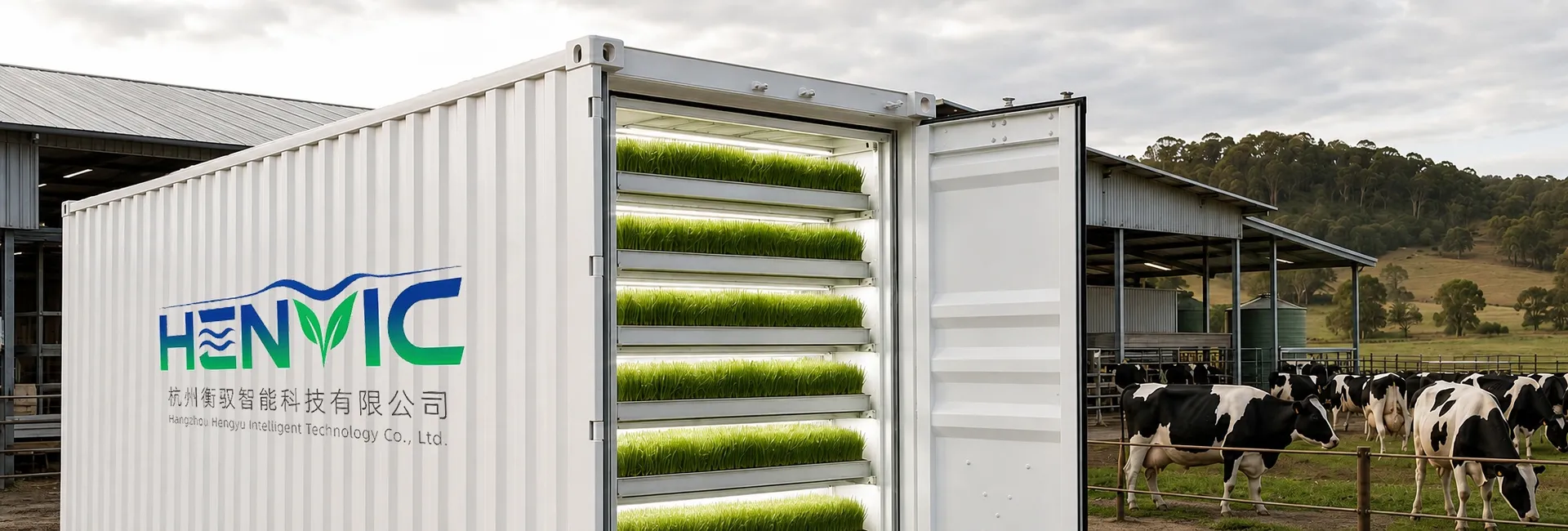
The crop list for a container farm is not a horticultural question. It's an economic one dressed up in plant biology. A crop qualifies only if its value per square metre per cycle is high enough to cover electricity, labour, and amortisation — and then survives a second filter: does its physical form fit inside a sealed box with limited vertical clearance and a controlled airflow pattern? Most failures come from growers choosing crops that pass the first test and fail the second, or vice versa.
The four filters every crop must pass
Before looking at any specific species, run the candidate through these gates.
Value density. What does one square metre of growing area earn per cycle? This is the number that decides everything. A crop worth 30 can.
Cycle length. A 30-day crop turns twelve times a year; a 90-day crop turns four. Short cycles multiply the value density figure and reduce the capital tied up in standing inventory. This is why fast, small, and expensive beats slow, large, and cheap.
Geometry. Will it fit? Leavy greens and herbs are vertically compact. Tomatoes are not. If the plant exceeds the usable headroom or spreads wider than the canopy spacing allows, you're wasting the space you paid to control.
Uniformity and harvestability. Container farms win on consistency. A crop that matures unevenly, or that must be hand-picked leaf by leaf over weeks, destroys that advantage and multiplies your labour cost. Whole-head or whole-bunch harvest is the target.
What works: the core crop families
Leafy greens are the backbone, and lettuce leads. Loose-leaf and butterhead varieties mature in 28–40 days, tolerate dense spacing, hold a compact rosette shape, and can be harvested whole. Retail and foodservice demand for consistent, clean, pesticide-free greens is deep and proven. Spinach, pak choi, Swiss chard, kale, and mustard greens fit the same profile, though some have longer cycles and wider canopies — check that they don't shade out the tier below.
Herbs are frequently the most profitable category. Basil, coriander, parsley, dill, mint, and chives carry high unit prices, grow fast, occupy little vertical space, and can be sold as living plants — which commands a premium and eliminates spoilage risk entirely. A living basil plant on a supermarket shelf has a shelf life measured in weeks, not days, and that alone justifies the container's cost structure.
Microgreens and baby greens are the highest value-density option in the entire category. Harvested at 7–21 days, grown at extreme density, sold at premium prices to chefs and specialty retailers. The trade-off is intense labour per kilogram and a very short shelf life after harvest, which means you need customers close enough to receive them within hours.
Specialty and ethnic greens deserve serious attention. Watercress, mizuna, tatsoi, shiso, and niche Asian greens often can't be sourced reliably from field supply, which is precisely where a controlled environment earns its premium. Scarcity, not volume, is where the margin lives.
Strawberries and small fruiting crops sit at the edge of viability. Some operators run them successfully as a premium, ultra-local product with exceptional flavour, but they demand higher light integral, longer cycles, pollination management, and far more space per unit of revenue. They work as a differentiation play, not as a volume crop.
What doesn't work, and why
Staple grains — wheat, rice, maize. The value per square metre is simply too low. Energy-intensive indoor growing cannot compete with field agriculture on a commodity that sells for cents per kilogram. This isn't a technology limitation; it's arithmetic.
High-light fruiting vegetables — tomatoes, cucumbers, peppers, aubergines. These are the most common mistake. They grow tall, need high daily light integral, require pollination, occupy large volumes per plant, and take 60–90 days or more. Even where they succeed technically, the energy cost per kilogram undercuts greenhouse production in almost every market. They belong in greenhouses, not containers.
Root and tuber crops — potatoes, carrots, onions, radishes. The edible portion is below ground, which means substrate depth, weight, and handling complexity that the system wasn't designed for. Harvest index is low and the market price is commodity-level. Being able to grow them is not the same as being able to sell them profitably.
Large, heavy, low-value brassicas — cabbage, cauliflower, broccoli. Long cycles, big footprint per plant, and supermarket pricing that leaves no room for indoor energy costs.
Crops with heavy non-edible biomass. Anything where a large fraction of what you pay to grow and light isn't what you sell. The system's cost is proportional to total biomass produced; revenue is proportional to marketable yield. Maximising that ratio is the whole game.
Long-cycle perennials and tree crops. Anything measured in years rather than weeks cannot survive the debt service.
Crops that need wind or insect pollination. Sealed environments exclude pollinators. Some crops can be hand-pollinated or mechanically vibrated, but that's labour that has to be justified against the crop's value.
The checklist, condensed
A crop is a strong candidate if it satisfies most of these:
- Harvest within 45 days, ideally under 35
- Compact, upright growth that respects tier clearance
- Whole-head or whole-bunch harvest, not sequential picking
- Market price high enough that electricity is a small share of revenue
- Consistent, repeatable size and appearance under controlled conditions
- Low sensitivity to tipburn and other disorders tied to transpiration
- Genuine local demand that pays a premium over field-grown alternatives
- Short field-to-customer distance, or a product form (living plants, microgreens) that demands it
A crop should be rejected if it fails on any of these:
- Commodity pricing set by field or imported supply
- Cycle longer than 60–90 days
- Plant height or spread that wastes controlled volume
- Low portion of marketable yield relative to total biomass
- Heavy pollination or trellising requirements
- Bulk and weight that make local distribution uneconomical
The decision that matters more than the crop
The most common error isn't picking the wrong species. It's picking the crop before picking the customer.
A container farm selling commodity lettuce into a wholesale market at field prices will fail, regardless of how well the lettuce grows. The same farm selling living basil, chefs' microgreens, and specialty greens under contract to restaurants and premium retailers within a short delivery radius can succeed, because the pricing power comes from the supply relationship, not from the plant.
This is why the crop list should be derived backwards: start with the customers who will pay a premium for consistency, freshness, or availability that field supply can't match — then select the crops that serve them, then confirm those crops fit the physical and economic constraints of the box. A container farm that starts from "what grows well indoors?" will end up growing the same lettuce as everyone else and competing on the one dimension where it has no advantage.
Closing
The crops that thrive in a container farm are fast, small, valuable, and uniform: leafy greens, herbs, microgreens, and specialty varieties where scarcity or freshness commands a price. The crops that fail are slow, large, cheap, and commodity-priced — staples, fruiting vegetables, root crops, and anything with a long cycle or a low harvest index. The boundary between the two isn't botanical, it's financial, and it moves with your electricity rate, your customer base, and how far your product has to travel. Choose the crop last. Choose the customer first.