Integrated Growing Systems for Controlled-Environment Agriculture
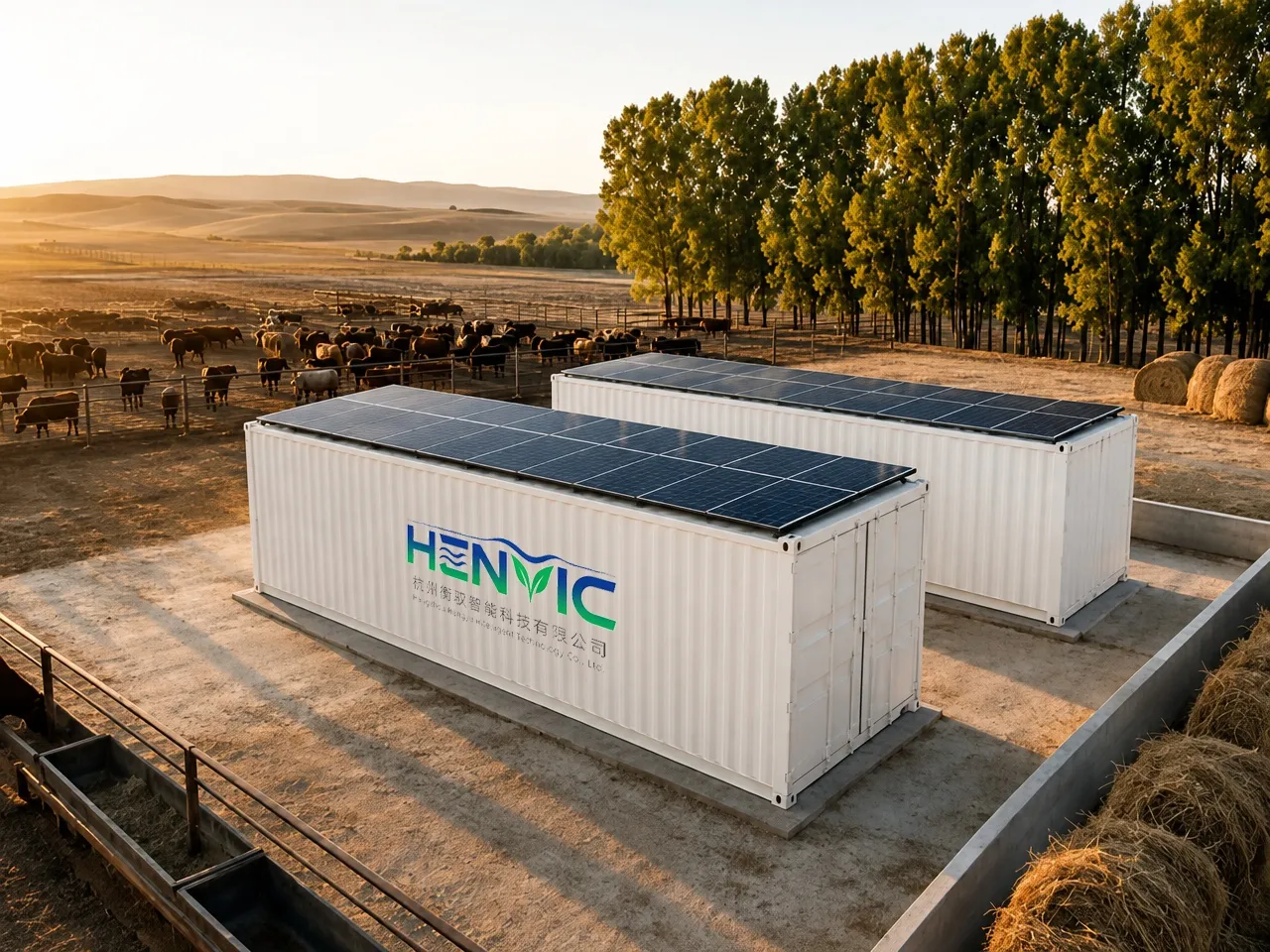
Container-based cultivation has emerged as one of the most flexible and scalable formats in controlled-environment agriculture (CEA). By converting standard shipping containers, insulated panels, or purpose-built enclosures into climate-controlled growing units, growers can produce leafy vegetables and mushrooms anywhere—from urban rooftops to arid deserts, from cold climates to remote research stations. The appeal lies in standardization, mobility and rapid deployment: a single unit can be shipped, installed and producing within weeks, while its sealed environment enables precise control of every variable that determines yield and quality. When leafy greens and mushrooms are combined in the same or adjacent containers, the result is a dual-production platform that exploits their complementary environmental needs and diversifies farm output.
Design Principles of the Cultivation Container
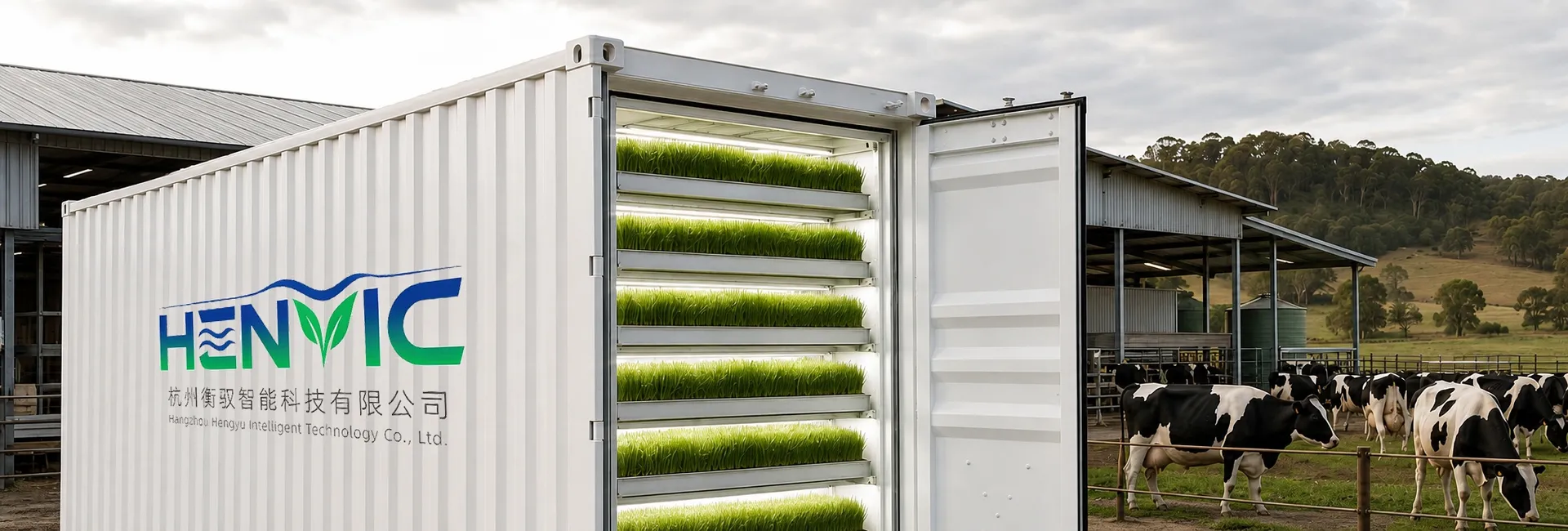
A cultivation container is essentially a miniature plant factory built around insulation, isolation and automation. The exterior is typically a stainless-steel or aluminum enclosure with high-grade insulation to buffer against outside temperature swings. Inside, the growing area is arranged on vertical or multi-tier racks, maximizing space efficiency—often several times the yield per square meter of a conventional greenhouse. Air handling is central: variable-speed fans, heaters, chillers, humidifiers and dehumidifiers maintain temperature and relative humidity within narrow bands, while HEPA filtration and positive pressure keep pathogens and pests out. Water and nutrient delivery are closed-loop: a reservoir feeds hydroponic channels or aeroponic nozzles, and the solution is recirculated, filtered and replenished automatically. Lighting is LED-based for leafy greens, and either low-intensity or dark for mushrooms. Sensors continuously monitor temperature, humidity, CO2, light, electrical conductivity and pH, feeding data to a central controller that adjusts actuators in real time. Many modern units add remote monitoring via smartphone apps, allowing one operator to manage multiple containers.
Leafy Vegetable Cultivation Technology
Leafy vegetables—lettuce, spinach, kale, arugula, basil, microgreens—are the most commercially mature crop in container systems because they are fast-growing, shallow-rooted and highly responsive to controlled light and nutrients. Hydroponics is the dominant method: deep-water culture (DWC) suspends roots in oxygenated nutrient solution; the nutrient-film technique (NFT) passes a thin film of solution across inclined channels; and aeroponics mists roots with nutrient droplets, delivering high oxygen and efficient uptake. Seedlings are raised in rockwool or foam plugs, then transplanted to the main growing racks for a short cycle—typically 30 to 45 days from transplant to harvest.
Light is the energy driver. LED arrays supply precise spectra, with red (around 660 nm) and blue (around 450 nm) dominating photosynthesis, and additional wavelengths fine-tuned for flavor, color and nutritional content. Light intensity is measured as daily light integral (DLI), and the photoperiod is usually set to 16 hours of light and 8 hours of dark. Temperature is kept moderate—around 18 to 24 degrees Celsius—with cooler night temperatures encouraging compact growth and good texture. CO2 enrichment, to two or three times ambient levels, boosts photosynthesis and yield. Nutrient management follows a standard formulation adjusted for growth stage, with electrical conductivity and pH monitored and corrected automatically.
Mushroom Cultivation Technology in Containers
Mushrooms present an entirely different set of requirements. As fungi, they do not photosynthesize; they digest organic substrate and require darkness or dim light during fruiting. This makes them an ideal complement to leafy greens in a container platform—they can occupy the same footprint without competing for light, and in some designs they even occupy lower, darker tiers.
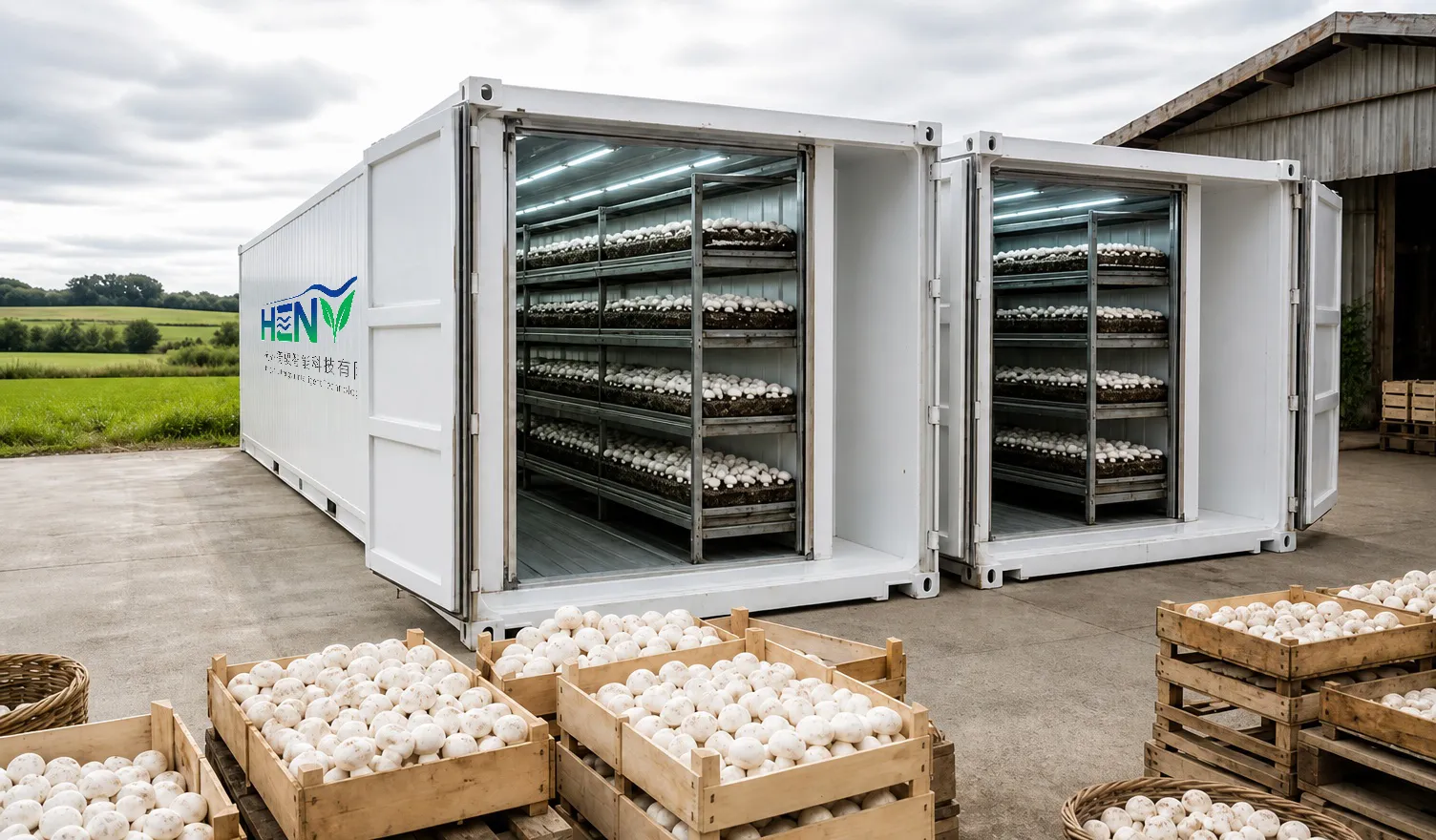
Spawn is mixed with a substrate—sawdust, straw, corn cobs, cottonseed hulls or supplemented compost—and packed into bags, bottles or trays. The mycelium colonizes the substrate in a warm, dark chamber, usually at 22 to 28 degrees Celsius and high humidity. Once colonized, the substrate is moved to a fruiting chamber where temperature is lowered and fresh-air exchange is increased to trigger pinning and fruiting. Humidity must remain very high—85 to 95 percent—because mushrooms transpire heavily through their caps and gills.
Carbon dioxide is the most species-specific control parameter. Oyster mushrooms demand low CO2—below about 800 parts per million—to form normal caps; button mushrooms require a staged drop from about 0.5 to 1 percent during spawn run to 400 to 600 ppm at pinning; enoki is grown at very high CO2—around 8,000 to 10,000 ppm—to produce the long, slender stems and small caps that define the product. Air velocity and exchange rate are therefore not fixed settings but dynamic tools adjusted per species and growth stage. Substrate sterilization or pasteurization, clean-room practices and rigorous contamination control are essential, because a single spore of competitor mold can ruin a crop. Light, where required, is provided only briefly for species such as brown shiitake that need it for proper cap coloration.
The Logic of Combined Production
Combining leafy vegetables and mushrooms in one container system is more than a spatial convenience—it is an ecological and economic strategy. The two groups occupy different light niches: leafy greens on the illuminated upper tiers, mushrooms in darker lower sections or separate zones. They also make use of different water and nutrient streams—leafy greens recirculate mineral nutrient solution, while mushrooms consume organic substrate—so a dual system can run with minimal cross-contamination and separate resource loops. From an economic standpoint, the combination diversifies revenue: leafy greens deliver fast, repeatable harvests and consistent cash flow, while mushrooms offer higher per-kilogram prices and premium or specialty varieties. It also hedges against market volatility and reduces the risk of a single-crop system. In a compact container footprint, a grower can offer a mixed product line—lettuce, basil, oyster mushrooms, shiitake—from a single installation.
Automation, Control and Data-Driven Management
Modern cultivation containers are cyber-physical systems in which hardware and software are tightly integrated. Sensor networks stream environmental data to a central controller or cloud platform, and algorithms adjust lighting schedules, irrigation bouts, ventilation and nutrient dosing in response to growth stage, plant density and even forecasted weather. Computer-vision systems can estimate growth, detect stress and flag harvest readiness, while machine-learning models predict yield and energy demand. For mushrooms, automation extends to casing, pinning management, humidity maintenance and harvesting, reducing the skilled labor traditionally associated with mushroom production. The outcome is that a single operator can manage multiple containers, with reproducible quality and consistent yields—key requirements for commercial viability.
Applications and Scaling Pathways
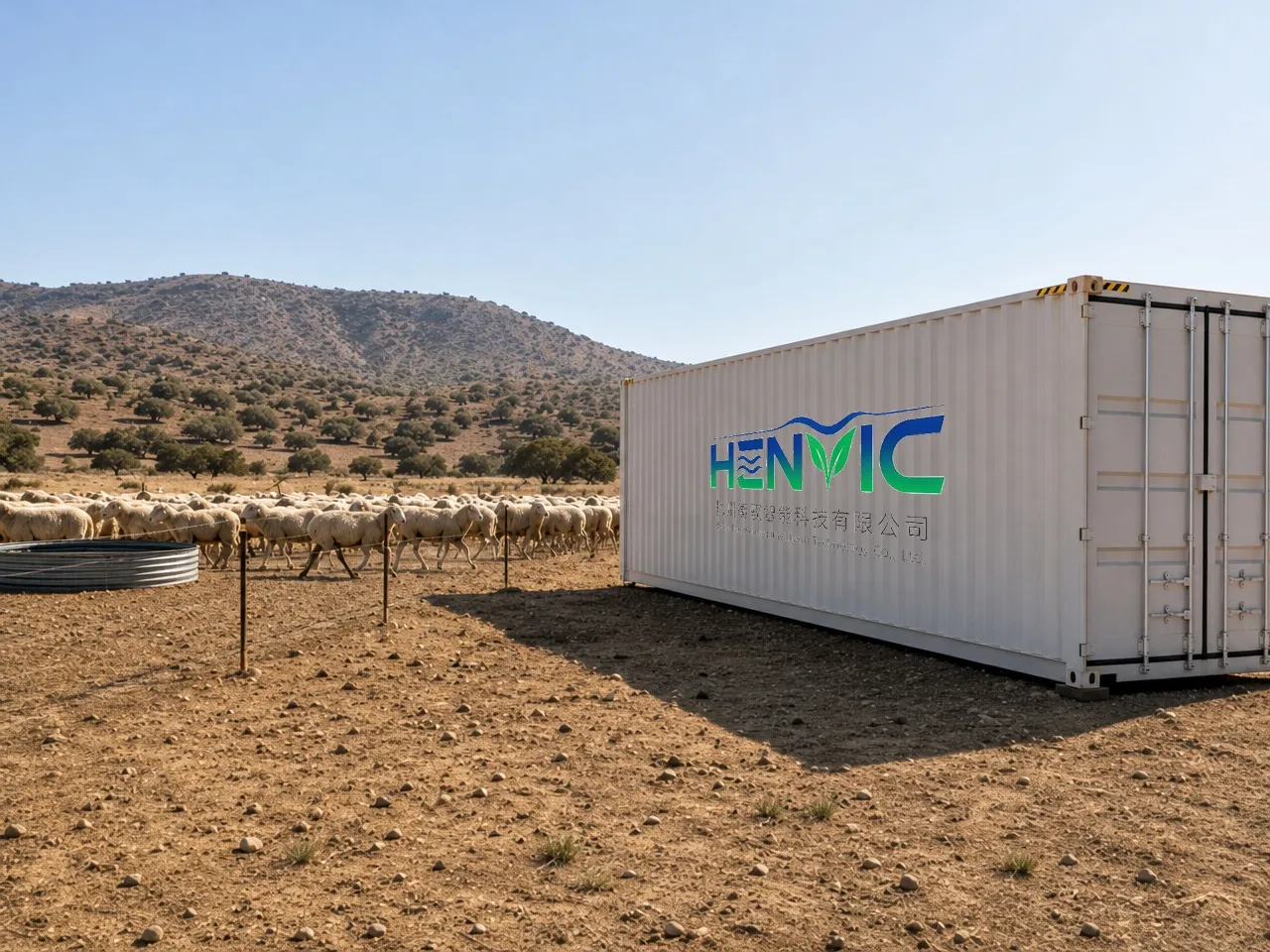
Container cultivation suits a wide range of deployment scenarios. Urban farms use stacked containers to supply local restaurants and retailers with fresh leafy greens and mushrooms, cutting food miles and acting as a buffer against supply-chain disruption. In arid or cold regions, containers provide year-round production where open-field growing is impossible, using brackish or reclaimed water with minimal evaporation loss. Remote communities, military installations and polar research stations use them to generate fresh produce where resupply is costly or impossible. High-value crops—baby leaf greens, microgreens, oyster and shiitake mushrooms—justify the energy investment, and the modular nature of containers allows capacity to be added incrementally. Container farms also serve as research platforms, where growth parameters can be tested and crop varieties screened before scaling to larger facilities.
Challenges and Outlook
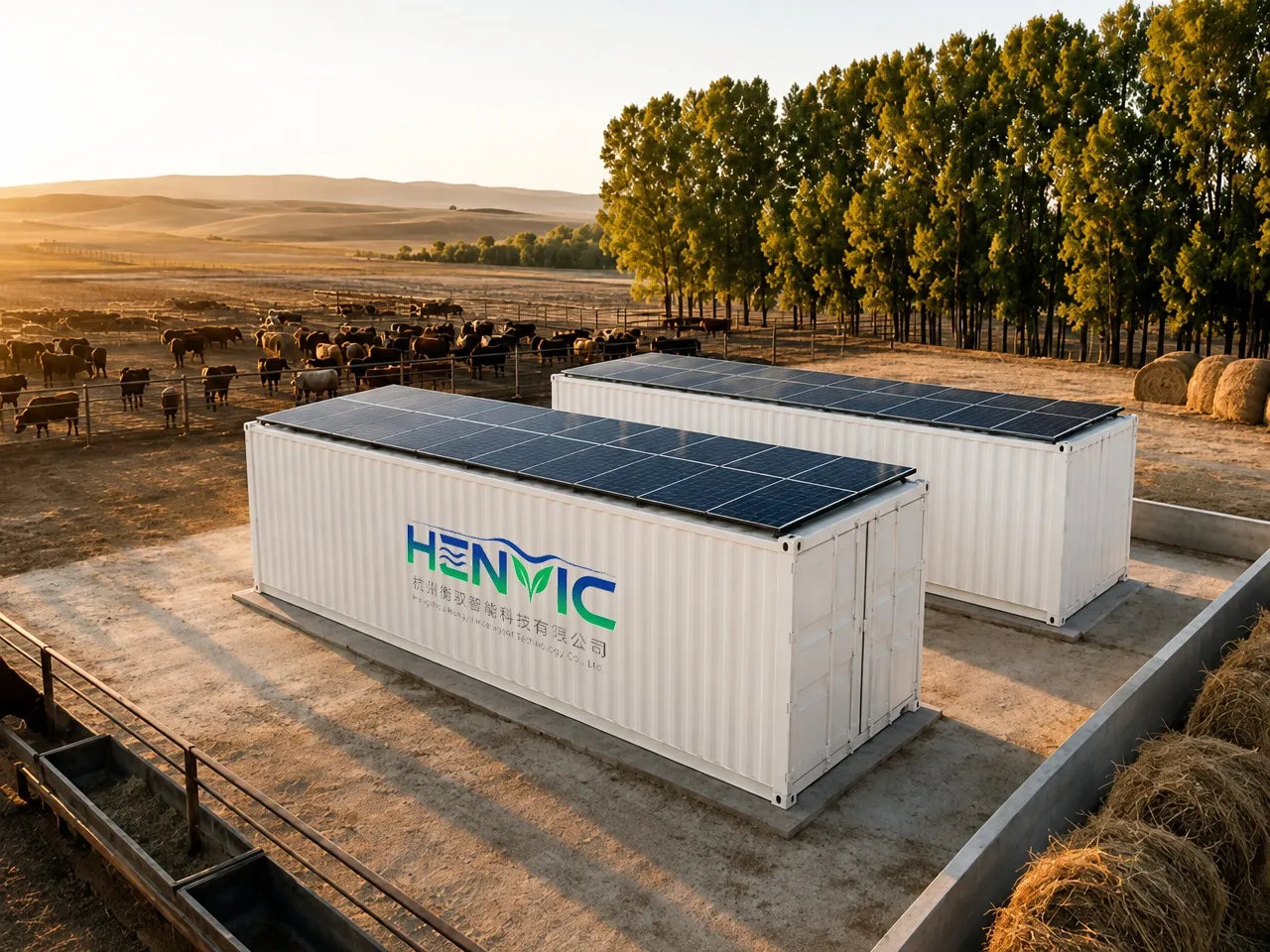
The principal constraint remains energy. Lighting, heating, cooling and dehumidification dominate operating costs, and for mushroom fruiting the humid, high-air-exchange environment is especially demanding. Improved LED efficiency, thermal recovery, renewable-energy coupling and crop- and light-recipe optimization all aim to raise yield per kilowatt-hour. Capital intensity, the limited number of commercially validated cultivars, and the lack of uniform technical standards also slow adoption. Yet the direction of development is clear: container cultivation is moving from a niche, demonstration-scale technology to standardized, exportable infrastructure. As AI models of plant-environment interaction improve, as modular hardware becomes cheaper and more interoperable, and as growers gain experience in combined production, the container will increasingly be treated not as a curious experiment but as a deployable unit of food-production capacity—capable of delivering both leafy greens and mushrooms, anywhere, anytime.